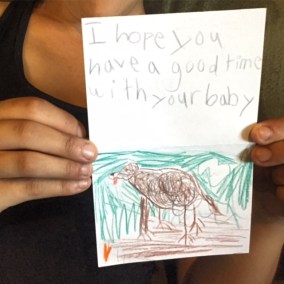
Simple Joys: A Vermont-Style Baby Celebration

IMG_9279We decided to throw ourselves a baby shower. The only hiccup? We hate baby showers. So we decided to throw ourselves a Vermont-Style Baby Celebration: no games, no gifts, just a mellow gathering of fun in the sun.

We invited friends, colleagues, neighbors, and their kids to come over to our house for a cookout. Being relatively new to the area (we moved from Central Vermont to Southern Vermont a little over two years ago) and being somewhat reclusive (we’re not really the party-throwing types), I wasn’t sure how many people would attend or whether the party would be successful. It turned out to be great!

IMG_9290

I did the morning scramble, rushing around trying to tidy every last corner of our house. I spent a significant amount of time working on the upstairs. Turns out, no one goes upstairs for an outdoor party (go figure). I also set up the grill, cleaned up the patio, fixed up the lawn games and kiddie pool, and set up the food. I put up lots of little festive balloons.

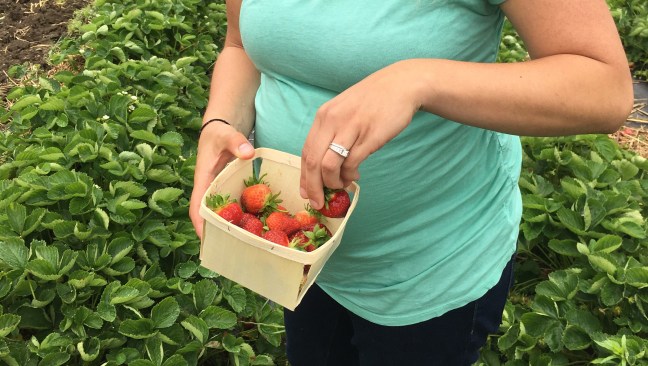
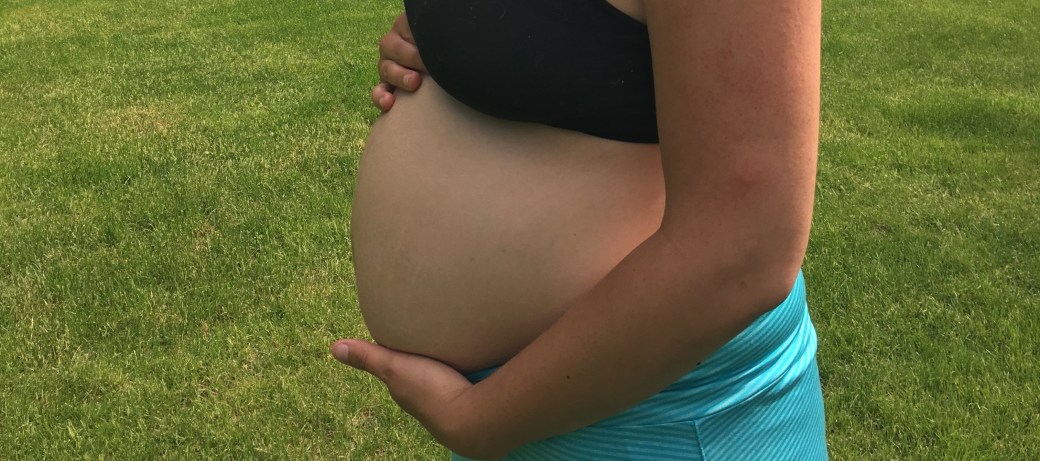
My wife did our other Saturday morning activity—she headed to our local farm to pick up our community-supported agriculture (CSA) share. Little did she know it was strawberry week and she would be bending over and picking two quarts of strawberries—not an easy feat for someone who was then 33-weeks pregnant!
IMG_9186 2

People started to trickle in around 2:00 PM and brought with them a ton of, you guessed it, strawberries from their own CSAs. Every counter quickly became covered in everyone’s fresh-picked strawberries! I was still in the mad dash to get everything together. Thankfully, the kids entertained themselves with our backyard play structure and the adults enjoyed snacking and playing with the Frisbee and Badminton sets. When my wife and I finally relaxed and joined everyone, we found ourselves showered in love and well-wishes, which is much better than being showered in presents (though contrary to our requests, that happened too).

I couldn’t help but sit back and look at all of these lovely people and their joyful children and think, These are going to be the people surrounding my child and supporting her as she grows. These people will shape her future. In that moment, I couldn’t think of anything better. Well, except maybe that gallon of frozen strawberries now in our freezer.
Planned Parenthood

On Friday I went to my local Planned Parenthood. Aside from the one time I stopped in to get pamphlets while staging a protest against some anti-choice people who had paraded onto my college campus, I had never been to Planned Parenthood before. I had certainly never been inside as a patient. But there I was, seeking birth control as part of the Newman-Goldfarb method for inducing lactation. I was nervous. What if they thought it was weird? What if they wouldn’t give the birth control to me? I tried to remind myself that I am a strong, capable, responsible woman in her mid-thirties exercising my right to reproductive medical care. I tried to remind myself that I had nothing to be nervous about! I tried, but I was not very successful.

The office was quiet, but friendly. A woman behind a desk handed me a clipboard and some papers.

“Fill these out,” she said.

I took a pen and sat down next to a big bowl of condoms and a book titled Dear Planned Parenthood: Love Letters from Catholics. I filled in all the highlighted sections of my form and handed it in.

“Thanks!” the woman said cheerfully. “Have a seat and we’ll call your name when we’re ready.”

I walked back over to my condom-side chair. I flipped through the book. Another woman walked in through the front door. Bounded, really. She had short, choppy hair with blue streaks in it.

“First time?” she asked. I thought I was playing it cool, but I guess my naivety showed.

“Yeah.”

“Don’t even sweat it!” she exclaimed, then bounced off to chit-chat with the ladies behind the counter.

Just then, a woman with dreadlocks appeared and called my name. I grabbed my things, stood up, and followed her. She told me she needed a urine sample and sent me to a room. When I reemerged, she took me down a hall to another office room.

She smiled and introduced herself. “I’m just going to ask you a few questions,” she explained. “First, what brings you in here today?”

“I’d like some birth control,” I told her, nervously.

“Okay – what kind do you want?”

“The pills.”

“Sure, sure,” she said. This was routine for her. She clicked through a few boxes and asked me a bit about my medical history. I answered more shyly than I expected as I stared at a poster on the wall covered in giant letters stating WE ALL DO IT. Two sets of legs, male and female, tangled with each other through the O.

“Are you currently having sex?” she asked.

“Yes.” But not the kind on that poster, I thought.

“What kind of birth control are you on now?”

“None.”

“Oh.” There was a long silence.

“My partner is a woman.”

“Oh, okay!” she said, clearly relieved. “But wait – do you have more than one partner? A male partner, perhaps?”

“No.”

There was another long silence.

“I’m sorry, but can I ask you something?” she looked at me, puzzled. “Why do you want birth control?”

“My partner is pregnant,” I explained. “We want to co-nurse. I’m following a protocol to induce lactation, and this is the first step.”

“WHAT?!” A huge smile spread across the woman’s face. “That is AMAZING! I didn’t even know you could DO that! Oh, this is so exciting!”

Her excitement put me at ease. “Yes!” I said, fears and nervousness suspended. “It is exciting.”

“Oh, gosh. Okay. I’m going to go get the doctor!” the woman sprang out of her chair and rushed out the door, her smile still hanging in the air.

A few moments later, the doctor walked in. She had short hair and cute glasses. She wore big pink earrings that were in the shape of either flowers or vaginas. Very Georgia O’Keefe.

“How’s our most exciting patient?” she asked. I smiled back at her. She talked to me for a bit about the protocol and searched her database for the best choice. She showed me how the clicking circle birth control dispenser worked and explained when to take each pill. She told me that I might feel a little ill at first. She packed up my pills, tucked them into a white paper bag, and sent me on my way.

The women behind the desk waved and smiled. “Good luck!” one shouted. Another clasped her hands beneath her chin.


Midwives and Home Births and Co-Nursing, Oh My!

After six months of the mainstream medical shuffle, we decided to interview some midwives. It took all that time to realize that for as much thought and planning and effort that had gone into getting Her pregnant, neither she nor I had put enough thought into prenatal care. When the pregnancy test came up positive, we did what every set of expectant parents do – we went to the hospital. From there it was all scans and tests and ultrasounds and group care. The experience was not tailored to our specific healthcare needs or personal desires. She was just another pregnant lady due in August, and I was just there for the ride.

When yet another appointment took two hours and the primary result was a computer print-out of the outdated USDA food pyramid, we decided to reexamine what we were doing. We bought books. We watched documentaries. We called the midwives.

We had our first appointment with the midwives about a week and a half ago. In our hour-long consultation, the midwives sat down with us and let us talk about our hopes and dreams for our birth experience. We talked about homebirths and whether She was a good candidate. We talked and we listened. We discussed safety and comfort. We heard Baby’s heartbeat. We felt understood. We decided to walk away from mainstream medical care and into the care of the midwives.

IMG_0824

During our appointment, one of the midwives said something to us that struck me. We were talking about my role as the non-gestational parent. I mentioned how I was feeling a bit like an outsider. The midwife noted that most partners feel this way, including heterosexual fathers (even if to a slightly lesser extent due to the baby containing their DNA). There’s that same helpless feeling; that same sideline feeling. Then she quipped, But you can do something those father’s can’t – YOU can breastfeed your baby.

What?

The idea of breastfeeding the baby growing inside my wife was exciting, confusing, and fascinating. But how does that work? Can I really do that? Wouldn’t it be weird?

In my quest to know more, I picked up the book Breastfeeding Without Birthing. The book was geared primarily toward adoptive mothers or mothers whose babies were born through surrogacy. However, the information was still there. In that book, I learned that breastfeeding without birthing has strong roots throughout history. Women nursed orphans, and communities nursed each other’s’ babies. I learned that lactation can be induced simply by repeated placing a baby to your breast, though most women today choose to induce by a combination of pumping and herbal supplements, or even pharmaceutical use. At this point, I would like to avoid pharmaceuticals, but it is really exciting to think that my wife and I might be able to share breastfeeding!

At first, my wife was a reluctant enthusiast. She worried that biology will take over and that she will be jealous seeing me nurse the baby. But she’s coming around. In fact, at this point I’d say that she’s almost looking forward to it.

One of the most wonderful aspects of being in a same-sex relationship is the equality of it all. We divvy up household chores and tasks based on who prefers the task rather than falling back on assigned gender roles. Pregnancy has offset that balance, and I’ll admit that it’s been a bit tough on our relationship. There are now so many obligations that are assigned rather than chosen. Co-nursing will allow us to maintain the balance that has served our relationship well for all these years.

Co-nursing will also allow for equal bonding and attachment and for reprieve for each of us when nursing becomes too tedious. It will help to establish both of us as Mother to this child. And, should one or both of us not produce enough milk, between the two of us we will be able to nourish this baby with our bodies alone. If we over-produce, we will be able to donate the milk to mothers in need, particularly vegan mothers who worry that introducing animal products not previously introduced in utero or in their breastmilk will be too much of a shock for their baby. There is so much we can do. I love being a woman!

And so the journey begins.

Midwives, home births, co-nursing – we’re in!

Banned & Bound

Picture1Edit

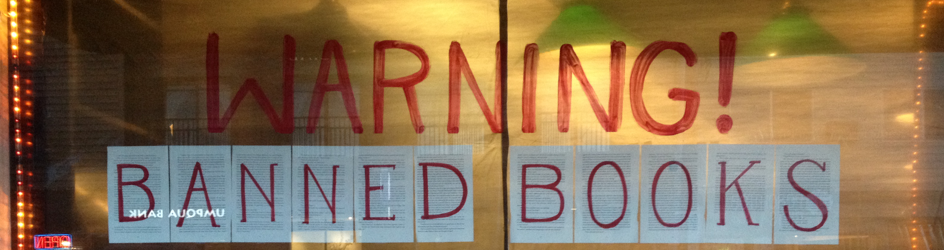
WARNING! Banned Books! Three words painted on the papered-up window of a bookshop in Portland, Oregon. Large and red, a deliberate exaggeration. In the center of the covered window was an opening. I had to look. I had to. Maybe it was my fascination with literature that was once considered immoral, illegal, or obscene. Or maybe it was the rebel in me. I walked up to that window and I peered in. I looked to the left and I looked to the right. Two-tiered shelves of familiar titles: The Catcher in the Rye, To Kill A Mockingbird, Beloved. Books that shaped this country. Books that shaped my life.

I remember seeking out those edgy books as an adolescent. At times I would pull one out and read in public, wanting to be seen. Mostly I would read in my bedroom, seeking solitude and privacy for those intimate moments where I was drawn into the storyline or drawn to the characters or when I saw reflections of myself drawn on the pages. The author’s candor spurred self-awareness. I found comfort, support, and understanding. I found pleasure. Formerly banned books not only helped me to discover myself, but also allowed me to realize new and exciting ways of being.

I see marriage as a collection of essays, ours newly printed. Her stories, my stories. Stitched together with string and glue, love and tradition. Single and flimsy at the beginning, but over time our collection grows stronger, thicker, and more enmeshed. Harder to tear apart. Harder to ignore. And like banned books, there is a realness to our story. There is a rawness. I find myself experiencing a new awakening, a new way of being, a story that is all mine but somehow more. Ours. Marriage has brought me companionship and intimacy. It is safe space to be vulnerable. It is the sharing of my dreams. It is seeing myself reflected in her—not because we are the same, but because she brings out the real me.

If marriages were books, I would have seen mine that day in Oregon, situated somewhere among the rows of those prohibited texts. Published in Vermont in 2012, my partner and I were bound together in one of the few states willing to recognize our story—to see its value, to appreciate its merit. I looked into the window’s opening once again and I imagined my marriage there, spine to spine with Radclyffe Hall’s The Well of Loneliness, at once illustrating both how far we have come and how much further we have to go.

Fear and misplaced morality created a culture where artistic works were censored or forbidden, where marriages like mine were illegal. There are still some who denounce same-sex marriage, wanting to censor our existence, seeking to quash our story. They push back against the recognition of love as love. Of love as justice. Of love as equality. They are reluctant to acknowledge the unpublished volumes that have existed for centuries—the truth and the beauty that has moved out of the shadows and into the libraries. Once-banned books now accessible. Once-forbidden marriages now possible in all fifty states.

In reading banned books, my world expanded in ways I never thought possible. Marriage has been a similar experience. I am growing and learning. In finding someone else, I have also found myself. We write our story together, page by page, chapter by chapter. She and I. Her and me. Once banned, now bound.

And I could read her every day.