Postpartum Parenting in a Pandemic

They say it takes a village to raise a child. What happens when there’s no access to that village?

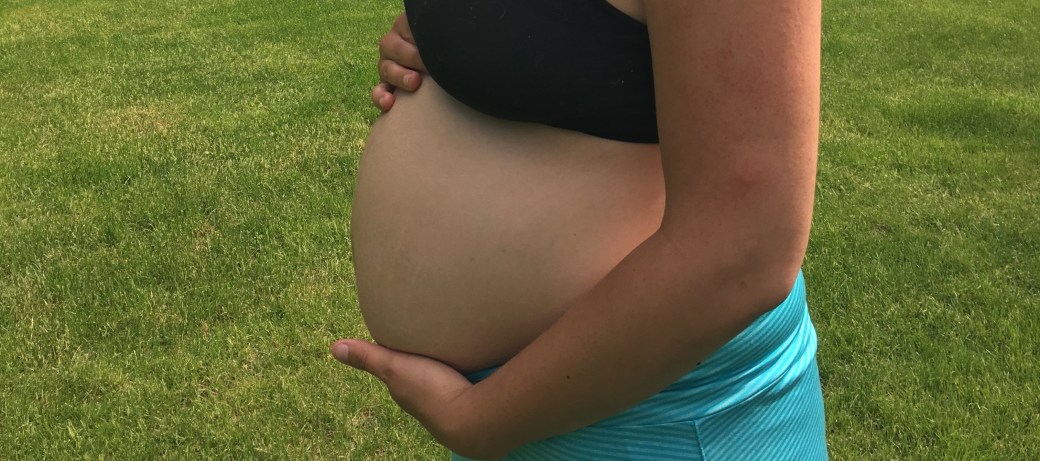
Peach was born the day Vermont went into lockdown. COVID had been on people’s radar, but the general thought was that if you washed your hands and avoided touching your face, you would be fine. Suddenly, that advice changed. Suddenly, everything was unsafe, everyone needed to isolate, and schools were closed. And in our home, suddenly, we were a family of four healing from birth, caring for a 2.5-year-old, and caring for a newborn, all without family, friends, or other help.

The isolation and fear that set in immediately after birth was intense. We were scared to go to the store, and scared to check the mail. We were scared to get medical care for myself and Peach and we were also scared not to get such care. Thankfully, we were able to live off of stored dry goods for quite a while. We did curbside pick-up twice at our local co-op, and after researching the safety issues implicated, we were able to receive homemade food that friends dropped off on our doorstep. Because we used home birth midwives, we were able to have Peach’s post-birth appointments conducted at our house by one midwife who took safety precautions. Still, I couldn’t help but stare at Peach and worry for the world she and Pidge will inherit.
IMG_9419

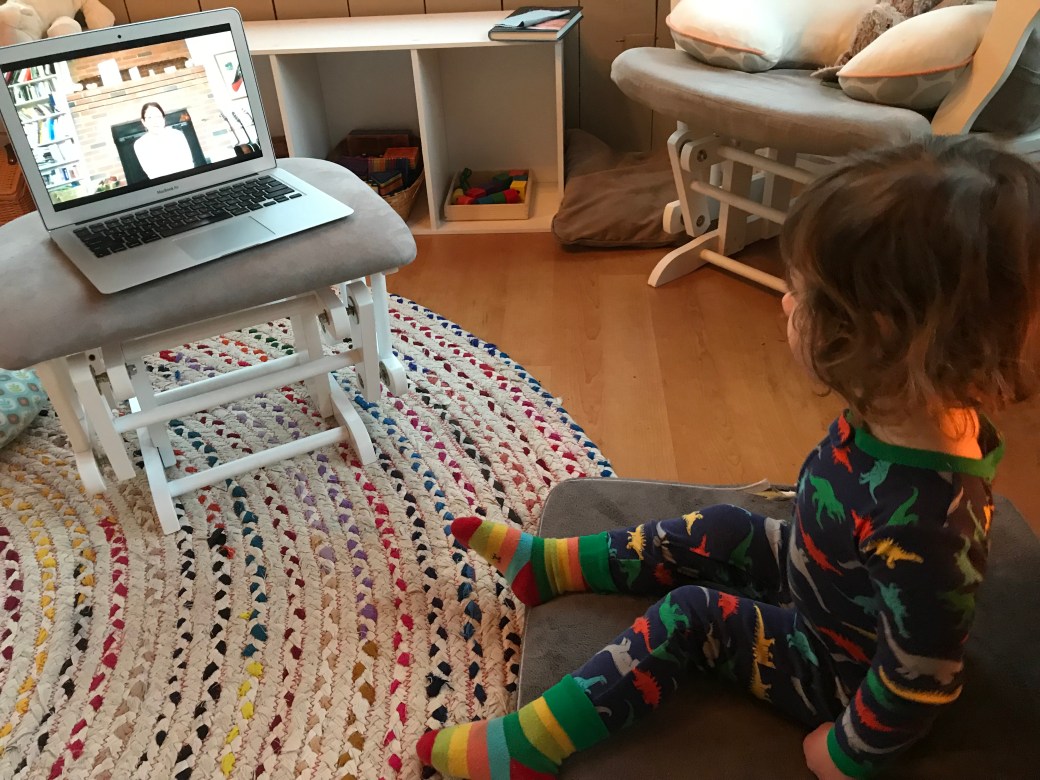
Pidge’s world especially turned upside down. We had no idea when we picked her up from school on March 13th that she would not be returning. Pidge loves school, and she misses her teachers and friends desperately. She talks about them all the time and can’t wait to show them things “when ‘crona-iris’ is over.” This sudden and drastic change to a life of isolation has been hard on her. The first time one of her teachers sent a video, she cried. She buried her face in my wife’s chest and choked out a whisper about how much she misses her teachers. Now, when we watch her preschool videos or participate in a recorded Sing & Dance, Pidge still tries to talk to the familiar faces on the screen. She tries to show off her twirly dress. No matter how many times we explain that it is a video and the other person can’t see her, she still tries. It breaks my heart. On top of lockdown, Pidge went from being an only child to being a sibling. How difficult this must be for such a little person.
IMG_9460

Regarding my health, our midwives advised I stay in bed for at least ten days to heal from significant tearing. So I sat in bed, alone, in pain, bleeding, and feeling soft. I thought I would be one to bounce back from giving birth, but the only bouncing I experienced was when my toddler would jump on the bed.

No one really prepares you for postpartum. Now that I have experienced it, I am not sure it is something you can prepare for. I was not prepared for my body to feel mushy and incapable. I was not ready to feel so weak. I was not ready to go from loving how cute I looked with my thick hair, glowing skin, and prego belly to suddenly feeling puffy and pale with stringy hair, cringing every time I looked in the mirror or at a photograph of myself. I had not had such a negative connection with my body since I struggled with an eating disorder in my teens. It felt really terrible. Actually, it still does.

And on top of that, I didn’t feel attached to Peach. People told me that I would be flooded with love for our new baby. I loved her, yes, but she also seemed so foreign to me. Here, on my left, was the toddler I had known for two and a half years, expressive and joyful. On my right was this tiny little stranger. I thought back to all that worry before Pidge was born – that I would connect with her less because she was not biologically related to me. So it was interesting when I felt more connection to her than I did to my own bio baby. Today, that is starting to change. At 12 weeks postpartum, I am beginning to feel more connection with little Peach. She is so, so adorable and I melt every time she smiles.

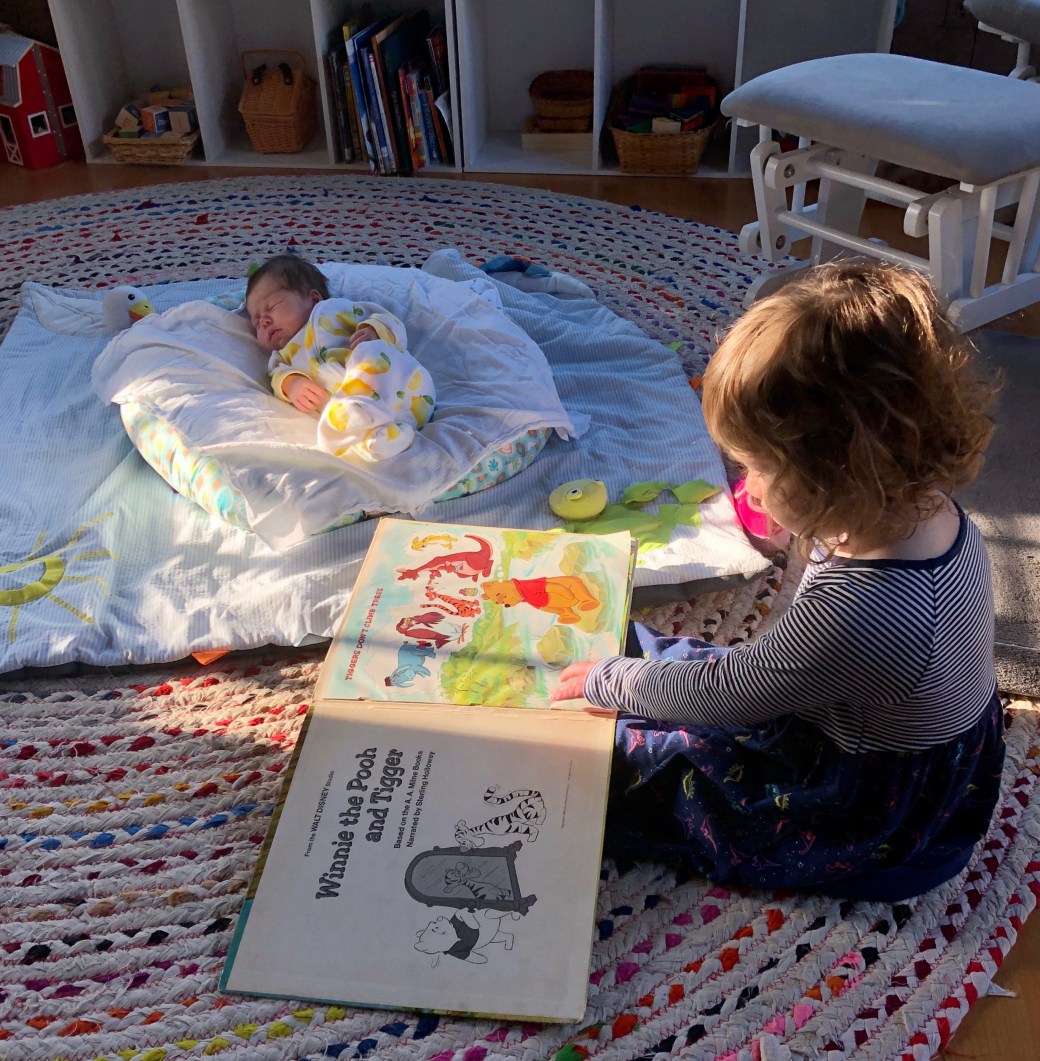
Pidge has adjusted to being a big sister beautifully. She adores Peach. She seeks out her little sister to provide and receive comfort. Pidge transitioned away from co-sleeping and nursing all while a new little person transitioned into these activities. And Pidge did it all with grace and kindness. It has been so rewarding to observe.

B2DE9C7D-DC51-4C05-8B7B-58F4D5F5A996

Still, I wonder how all of this will affect Pidge long-term. On the one hand, the quarantine has allowed us to focus on our family and to spend some amazing time together. On the other hand, it is hard for me to watch her cover her face with her hands or scramble to pull up her mask if we see other people on the hikes we eventually ended up doing. I am proud of her for not resisting the social distancing and masking we ask of her, but I worry for her. I try to remind myself of her resilience, and I hold onto hope.
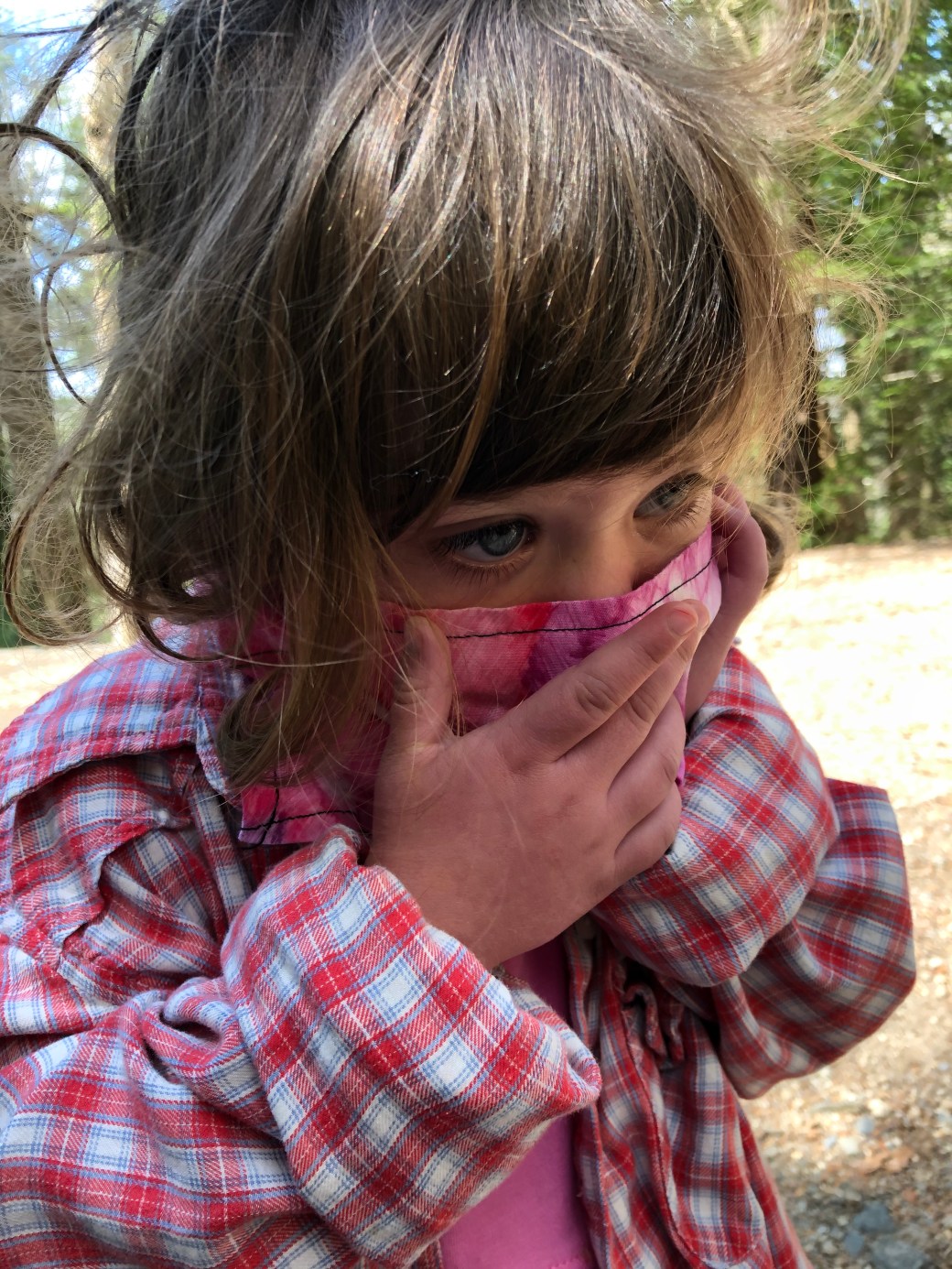
IMG_0953

Quarantine has extended for our family – we are under medical advisement to stay at home even as the state begins to open. Pidge has underlying cardiac and endocrine issues that increase her susceptibility to COVID. She is currently being tested for some hematology issues that have us concerned. To that end, we have been making trips to the hospital every now and then to have Pidge’s blood drawn or to see specialists. She wears her mask dutifully and works so hard to do the right thing, pressing her little hands together to avoid touching anything. She really is a remarkable child.
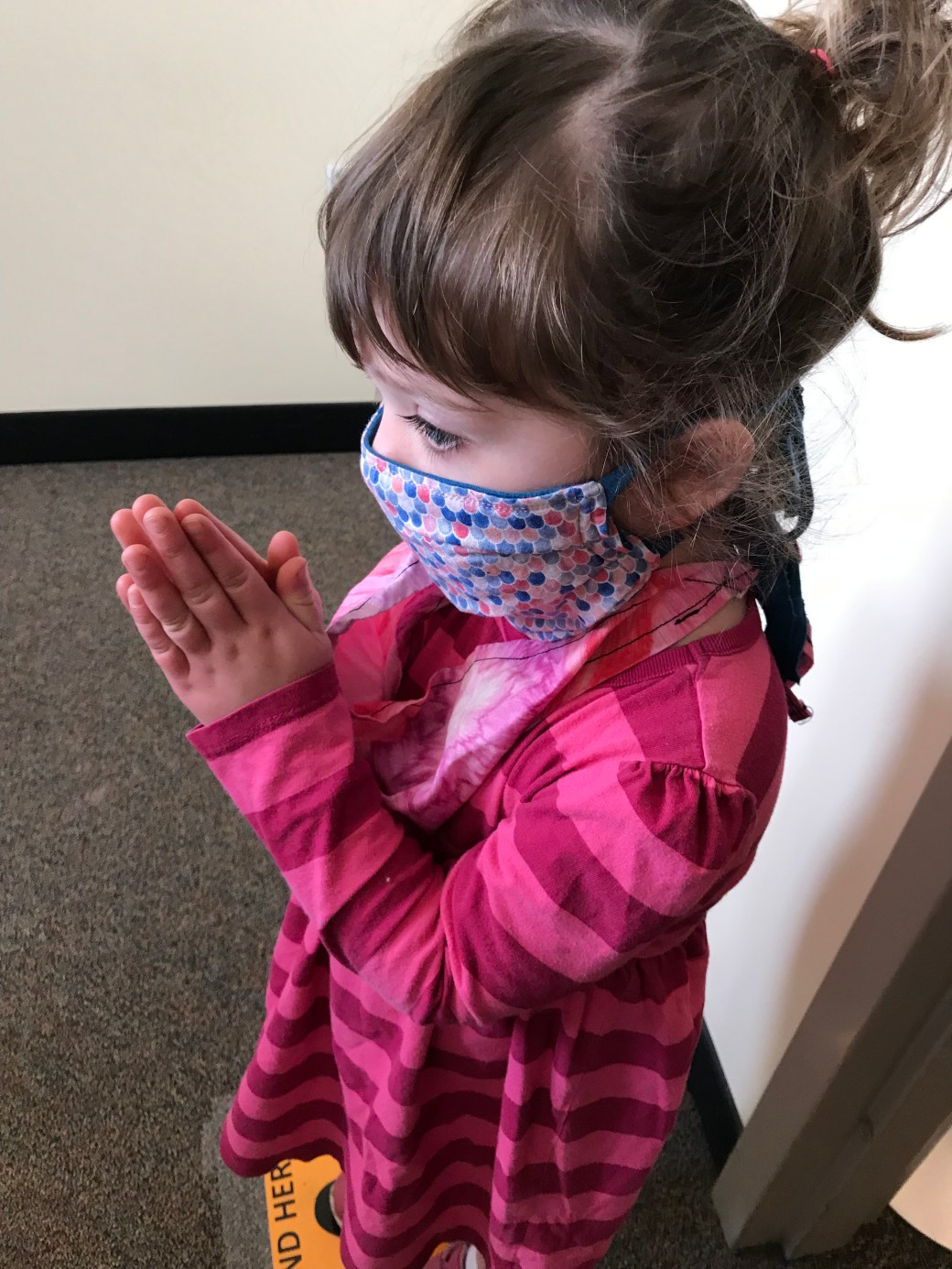
IMG_2211

Although all of this has been exceptionally difficult, I cannot help but acknowledge how very lucky I am. I have a beautiful family: a caring and generous wife, a toddler full of heart, and a beautiful, healthy baby. I also feel very fortunate to be living in Vermont right now. While our friends who live in cities are stuck in 600 square foot apartments, we have nearly unfettered access to the great outdoors. We hike, swim, and enjoy all the nature Vermont has to offer.

It is so easy to get mired in the mess. It is easy to feel frustrated and defeated and discouraged. But there is just so much to be thankful for as well. As we move forward, one day at a time, my goal is to focus less on my hardships and more on the joys. Because there is just so much to be joyful about.

IMG_1146


Known Donor

Every time he walks onto the playground, I find myself flashing a quick glance at Pidge, looking for signs of recognition. Sometimes she acknowledges him, mentioning him by name later in the evening just as she would for any one of her friends’ parents. Sometimes when he says hi to her she just stares.

We live in a small, rural community, which means lives overlap. A lot. Everyone crosses paths with everyone all the time. The idea of if-you-dress-a-mess-you’ll-run-into-someone-you-know is not a thing here because you are always running into someone you know. It’s the nature of living small.

Using a known donor to conceive Pidge has been an interesting experience. When we were looking to conceive several years ago, we weighed the ideas of using a sperm bank versus a known donor. As an attorney I knew that using a sperm bank was the safer route. Parentage is more easily established that way, and it doesn’t create the possibility where the donor could try to claim legal rights to your child. However, there were also aspects of using a sperm bank that concerned me. In this digital age, I am watching concepts of privacy and anonymity lose their meanings. I feared that even if we chose an anonymous sperm donor, our daughter might one day be able to find out his identity. What if we didn’t like him? Would she suddenly be wanting to spend time or holidays with a man we didn’t know and didn’t like? Would she end up with something like 32 siblings, as I had read about in the news?

We decided to ask a friend of ours who lived across the country to donate sperm. We were nervous to ask, worried it would be weird or jeopardize our friendship. Instead, he eagerly said yes, adding, “Y’all will be great parents.” We were overjoyed. As he is an attorney too, he and I worked hard to ensure that both of our legal rights would be protected. He wanted to help us, but he didn’t want to end up stuck with parental obligations; we wanted his help, but we didn’t want him to be able to claim legal rights to our child. Being across the country from one another, we felt as though we had an added layer of protection—it was unlikely that our paths would cross without concerted effort. After many months of contracts and research and reaching out to other attorneys, we started trying. Each time, the attempt to conceive was unsuccessful. We grew discouraged.

One evening, as I was working late, my wife went out for drinks with a colleague of hers. He was more of an acquaintance than a true friend, but they were friendly with each other and enjoyed each other’s company. He told her about how he and his wife were working on buying their first home together, and she told him about our failed attempts at trying to make a baby. Then he commented, “You know, if you ever need help with that, I would be happy to help.” My wife smiled and said thanks, but didn’t think much of it. When she told me about her conversation, I couldn’t believe what I was hearing.

“Do you think he’s serious?” My wife said she thought he was.

“Maybe we should do it,” I said to her. “I mean, what we have been trying has not been working. Maybe it’s because our donor is far away, or maybe there is something with his sperm. Whatever it is, maybe it wouldn’t hurt to try someone different.”

My wife thought about it. She thought about her colleague, and his generous offer. “He does look a lot like you,” she remarked.

She was right. He is taller than I am, but has the same color hair, the same texture hair, and the same color eyes. While I didn’t know much about him at the time, I knew he was smart, funny, and kind. Still, I was concerned about the fact that he lived in town, and that it would be possible that our children would be around the same age.

After several follow-up conversations with him, and after he discussed it with his wife, we decided to move forward using him as a donor. Three cycles later, my wife was pregnant.

My wife’s pregnancy was filled with emotion. We were so excited to become parents, but I was worried. What if I wouldn’t feel connected to this child? What if our donor decided to try to assert legal rights at the last minute? What if he changed his mind once our child was born? What if he started seeing the child as his? What if we see each other constantly and it is weird? What if our kids become friends? There were so many unknowns and, even with legal contracts, there was so much trust I had to place in a man I barely knew.

Fast forward two years and I am watching him play with his child on the playground. His child squeals with delight—“Daddy!”—giggling as his father pushes him on the swing. My daughter is playing with another child on the slide. I look over at the swings and I look back at my child. I study her face, looking for his face. I look for similarities between his child and mine. But I don’t see them. At least, not really. Sure, they are both adorable. Some of their features share certain aspects, but you would never pick them out as siblings in a crowd. Her face is not his—her face is simply my daughter’s face, perfect in every way.

Our relationship with our donor has been beautiful. His child and our child are friends, and our daughter knows him as her friend’s dad. Our donor has never once crossed any boundaries or even attempted to cross boundaries, which has been wonderful. His wife is supportive and similarly hands-off. When I see their child, I have a brief moment where I recognize that their child and our daughter are related. I mention that to my wife. She casually says, “Oh, I guess you’re right. That doesn’t really occur to me much.”

Of course, some day we may have to cross that bridge. Our contract allows us to reveal our donor to our child when she turns 18, or earlier with written consent of all three of us: my wife, the donor, and myself. But that is an issue for a later date.

Today, things are more simple and more beautiful than I could have ever imagined. I am pregnant with our daughter’s sibling, conceived with the help of the same donor. Over the course of being Pidge’s mom, I’ve come to realize that genetics mean far less to me than I thought. Still, I am excited about the fact that Pidge and her sibling will be genetically connected—not through their moms, but through the selfless giving of their donor. Their known donor, who we will always be thankful for and love.

IMG_7838

Pidge, after a successful day of painting at preschool


What’s Important

“But you’re so good.” “But you can make so much money here.” “But… this doesn’t make any sense.”

Those were the responses I heard from the partners at my law firm when I told them I’m leaving the legal profession. In a way, they’re right. It doesn’t make sense. And yet somehow it does. Because more than success, more than money, more than anything, what I want is time. I want time with Pidge, time with my wife, time with my family. I want time to write, time to create, time to be me.

I’ve been spending a lot of time recently thinking about who I am and what is important to me. For so many years my identity has been wrapped up in being an attorney. But on August 14, 2017, I became a mother. My whole world changed.

And yet, it didn’t. I was still going to the office each day, still measuring life in 6-minute billable increments, still stressing about malpractice and procedure and the Civil Rules and the (dis)satisfaction of divorcing clients. I would spend time with Pidge on the weekends, or in the early mornings before I went in. At first, when I would leave her in the mornings, she would cry and scream for me, stretching her little arms my direction. Now she just says “bye” and waves. She expects me to leave her each day, and I hate that. When I come home late in the evenings, she’s already melting down. Maybe we’ll have dinner together. Maybe I’ll bathe her. Or maybe I will see her for 15 minutes before she needs to go to bed. I was missing my child. I couldn’t help but think that maybe, just maybe, there was a better way. Maybe I should settle for more.

I’m not sure who said it, but there’s a quote I think about often: “Don’t cling to a mistake just because you spent a long time making it.” I spent a long time becoming a lawyer. I studied and studied and studied and took the LSAT and applied to schools and got in and studied more and stressed and cried and graduated and studied and studied and passed the bar. Phew. Then I went to work. I worked in private firms and for nonprofits and as a public defender and as a solo practitioner and then back to private firm. And to be honest, I’ve not loved any of it. The closest I came to enjoying my career was when I was working as a public defender because I love being in court. But even that was arduous. I worked very long hours for very little pay. It was unsustainable. For me, every way I have practiced law has been unsustainable because it does not sustain me emotionally. I find no joy in sitting in an office by myself, staring at a computer screen answering countless emails. I am simultaneously stressed and bored. I like being in court, but time in court is sparse. I sit and stare at a photo of Pidge I have framed on my desk and my heart yearns for her.

I’m opting out.

I’m choosing what’s most important to me. I’m choosing my family. Today starts the beginning of a new adventure: I’m studying and preparing to become a teacher. While the pay won’t be as good as attorney pay, I am looking forward to having a schedule that is better suited for my family. I am looking forward to being able to exercise creativity. And I know that I will be a damn good teacher. I just will.

But anytime there is a big change like this, excitement is always tempered by fear. And I am afraid. I am afraid of walking away from financial security and from my future as a respected lawyer. However, I look at what that future looks like and I don’t want it. I don’t want to be a partner at a law firm, a business owner. I don’t want to be hustling for the next dollar. I don’t want to be afraid to take time off of work. I want regular hours, summers off, and a pension. I want a lovely, modest life filled with family and love.

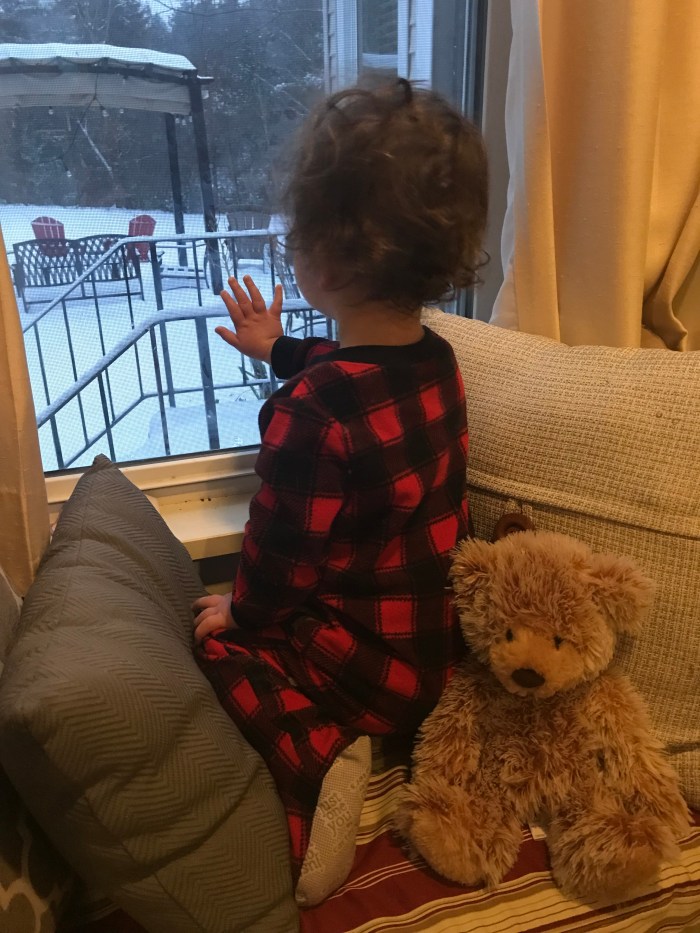
It snowed on Friday. Pidge, who is getting over her first illness, toddled over to the window seat and stared at her backyard. She was looking at the same space she has seen every day for 15 months, but today it looked different. It was shimmery and white and fresh with promise. Pidge placed her chubby little hand on the glass, knuckles dimpling in that adorable way that they do. That’s my world too, little one. The same, but different. The same, but new. Let’s build a snowman. Let’s eat the snow. Let’s put on our boots and our mittens and our hats and do anything we want. Let’s do it together.

Together.

That’s what’s important.

IMG_2705

Dear Baby

Dear Baby,

Let me start by saying that you are my world. My sun rises and sets with you. You bring me such joy. Because I am working full-time, I don’t get to spend as much time with you as I’d like, but when I do, it’s so sweet.

IMG_0980-1

I love waking up next to you each morning. You usually wake me up to nurse shortly before my alarm goes off at 5:30 AM. You make a little searching noise and I know that it’s me you want. I roll on my side and you nurse. Sometimes you coo and grunt while you’re nursing. I feel your tiny little legs kick, kick, kick me under the sheets. Not hard, but rather it’s as if your body is saying, “Oh, yeah. That’s the good stuff.”

I hear the buzzing of my alarm and I roll out of bed, careful not to wake you. I go through my daily routine — turn on the heat, start the coffee, put away the dishes, clean the cat litter, shower, pump. I wait for you to come down.

I hear footsteps on the stairs and know that it’s Mama. You’re in her arms, bright as a shiny new penny. You look at me with your open little face. Sometimes you give me a big smile. Other times you’re sleepier, staring at me glassy-eyed. Your mama hands you over to me and I melt. We snuggle for a bit and then I put you on your little potty to do your business. You baby-talk and bounce. We tie up your footie jammies in the back and it looks like your donning butterfly wings.

Then we play. We sit together on your rug and play with your book, your stacker, or any other toy. Sometimes you just roll around. I smile and stare into your perfect face, telling you over and over again how much I love you. Sometimes I cry when I have to go to work. Leaving you is really hard.

04 14 18

But you are there, in my office. Your face adorns my walls and your smile is framed on my desk.

At 5:30 PM, I rush home to be with you. Mama is usually cooking dinner and you’re hanging out in your swing or on your play mat on the floor. Sometimes you give me a big smile but usually you just look up at me like, “Oh, it’s you. You’re supposed to be here.”

I scoop you up and we go upstairs so that I can change out of my work clothes. You sit on the bed and watch me. Once I’ve changed, I bound on the bed. You giggle. I kiss you all over and blow on your tummy. You squeal with delight. I kiss underneath your chin and you chuckle, “heh-heh-heh.” You smile so big that I can see all of your gums and the two small teeth you have on the bottom. After we’ve played, you nurse.

We eat together. I love watching you try out new foods. So far you’re a lot like me — you like things that are saucy. You like to suck the sauce out of broccoli. You like scooping up noodles or rice and slurping out the sauce. You’ve been surprisingly adventurous about spice, but if something is too spicy, you’ll hold your arms straight out to the side and shriek. You’re very good about communicating how you feel about things.

Most nights, we give you a bath before bed. You used to bathe with me but now you’re big enough to sit up in the tub on your own. You splash and play in the water. You like playing with a ping pong ball and with a cup. You watch that ball and you follow its movements in the water. Then you reach hard and grab it, so proud of yourself.

We head upstairs for bed. Mama has gotten everything ready, from your diaper to the sound effects to the twinkly rainbow lights above your bed. I tuck you in and you instinctively roll toward me. We nurse and snuggle and eventually you fall asleep. I kiss your little head and whisper softly, “Sweet dreams, my precious one.”

FullSizeRender.jpg-11


Regret

I should have listened to my mother.

My mom was a stay at home mom. She hated the term “housewife” and often referred to herself as a homemaker. My sister and I would roll our eyes. We were too young to understand the value of a home, or the energy and effort it took to create warmth and cleanliness, order and comfort. Hominess. But even then, my mom’s role was not just homemaker, it was mother. She repeatedly claimed that being a mom, being our mom, was the best job in the world. Ungrateful as we were, we rolled our eyes even harder.

I know now what I couldn’t have known then – for me, just as it was for my mom, being a mother is the best job in the world. Being a mother is what drives me. It is what inspires my days. It permeates everything I do. It informs my reading choices, my eating choices, my drinking choices, everything. It is what I want to do. Problem is, it is the only thing I want to do and I can’t do it because I am a lawyer and the sole breadwinner of our family.

I made this bed. As a young adult, I was sure I wanted a lucrative and fulfilling career. I scoffed at women like my mother who warned that I may want to stay home with my children. Not me, I thought. I wasn’t even sure I wanted to have children! I passed over articles about work-life balance or about “having it all.” I didn’t need to have it all, I thought. I just want to have success. And for me, “success” meant a career, not a family.

Then my sister had my nephews and my thoughts on children changed. They might not be so bad. I wasn’t sure that I wanted any, but I wasn’t ruling it out, either. That said, I was still very career-focused and career-driven.

After college, my partner (now wife) put her career objectives on hold so that I could attend law school and pursue a career in law. I worked hard, graduated at the top of my class, and obtained employment. It wasn’t very lucrative. It wasn’t very fulfilling. I tried a different position. But the stress and 80+ hour work weeks nearly killed me. I tried yet another position. I soon came to realize that there were a few things I liked about being a lawyer, but there was a lot that I didn’t like.

Time moved forward. My wife and I married and a few years ago we bought a house. We built our nest and began to have discussions about filling it. By this time, I had come around to the idea of having children so much that I actually longed for one. We wanted a baby and because I needed to focus on my career, we decided that my wife should carry and birth the child.

After nine months of trying, my wife was finally pregnant. We were beyond excited.

About six months into the pregnancy, I had a talk with my employer about family leave. They had known my partner was pregnant, but seemed surprised that I would want to take time off when the baby was born. I was told that they would need to discuss the issue with HR. Discuss the issue, I thought. Aren’t I entitled to some sort of parental leave? I realized then that for all the laws I researched for other people, I hadn’t spent enough time researching the laws that impacted me. I looked up the Family and Medical Leave Act (FMLA). I didn’t qualify. I was shocked and crushed. I hoped that maybe my employer would be altruistic, that maybe they would realize how much this meant to me. Instead, I was told what I already knew: I didn’t qualify for family leave. However, they added, if I wanted time off I could take an unpaid personal leave of absence, capped at four weeks.

I took the four weeks. They flew by.

When it came time to return to work, I bawled. I thought back to my mother’s words, “Once you have your own baby, you’ll know.” She was right. The pull to be home with my daughter was stronger than I could have ever imagined.

I didn’t love being a lawyer before I had a baby, and now I struggle even more. I hate leaving my beautiful, smiling baby girl only to spend the majority of my day stuck in front of a computer researching statutes. Maybe it’s the type of lawyering I’m doing, I think. I apply for new positions. But even these new positions lack luster.

I wish I could just stay home with our baby. I envy my wife, who spends her days snuggling our daughter, taking naps with her, playing with her, and keeping the house. We can’t swap roles or even both do part time work because it does not make financial sense. Because she can’t earn as much as I can. Because her career ambitions took a back seat when I went to law school. Because this is what we agreed on. Because I thought I knew myself.

I feel stuck. We need my earning potential. We need the money to pay our bills, to support our family, to pay off my student loans. But I need something to change. Something’s got to change.

I just want to be a mother.


Official

My stomach began to flutter as we pulled into the parking lot.

“Why am I nervous?”

My wife looked at me and gave a knowing smile. “Because you’ve never been the subject of a court proceeding before.”

We were early, so my wife gave Baby a quick nursing session before we went inside. It was my turn to nurse her, but I was worried that I would run into a client and create an awkward situation. As a lawyer in a small town sitting in a courthouse parking lot, the odds of that were great.

“There she is!” The security guard’s booming voice greeted us warmly as we entered the building. “And you brought the little one!”

Ever since Baby arrived, court staff always gave me grief any time I showed up without her. “I can’t bring her to my hearings,” I would tell them, to which they would respond, “Excuses, excuses.” Everyone loved Baby.

“Why are you three here today?” They asked my wife and me.

“I’m here to adopt my own daughter,” I replied.

We had been preparing for this day for months. As a lawyer, I understood the importance of protecting my legal rights to my daughter, and her legal rights to me. I knew that my name on her birth certificate was not enough. I had read horror stories of families ripped apart and of the less traumatic but no less frustrating denial of dependent health insurance coverage. As a mother, I was frustrated that we had to jump through these hoops that heterosexual couples did not. My wife and I had planned for Baby, we worked together to choose a donor, to draft a contract and have it reviewed by another attorney, to conduct at-home inseminations, to carry a fetus for nine months, and to birth this tiny miracle. Baby was born into my arms, my name appeared on her birth certificate. I nurse Baby with my own body. I have her face memorized. Her smile brightens my day. She is my world. And yet, there I was – pleading with a judge to legitimize my role as her mother.

Vermont law demands a lot of same-sex couples who wish to solidify their families through second parent adoptions. Tasks include:

  1. Filing an extensive petition to adopt which includes but is not limited to financial statements, disclosures about extended family, a description of the length of time the petitioner has resided with the child and “how the petitioner obtained physical custody of the child including the date when placement happened and the petitioner’s relationship to the person or agency that placed the child with them” which, for many petitioners, is all of the child’s life;
  2. Filing a copy of the child’s birth certificate;
  3. Preparing and filing a notarized relinquishment by the sperm donor and waiver of counsel;
  4. Preparing and filing a notarized consent by the child’s biological parent;
  5. Filing copies of marriage and/or divorce certificates;
  6. Conducting a preplacement evaluation (home study) by a court-appointed qualified evaluator who may charge the petitioner a reasonable fee and preparing an extensive report containing detailed information;
  7. Background information about the social and health history of the child, history of any physical, sexual, or emotional abuse, school records, a social and health history of the child’s parents and extended family including but not limited to genetic history, hereditary conditions, racial, ethnic, and religious backgrounds, educational or vocational achievements, and learning disabilities; and
  8. A criminal record check of the petitioner, including an FBI national criminal history record check accompanied by a set of the petitioner’s fingerprints and a fee.

Thankfully, our local judge allows couples to forego the most invasive part of the process, the home study, so long as the couple provides the judge with ample recommendation letters. However, even that process is degrading and cumbersome.

We shuffled into a small side room near Courtroom 1. I tried not to draw attention, but colleagues who spotted us in the hall ran over to express their congratulations as well as their outrage. As one friend put it, “I’m glad we live in a time where this is possible, but I am sorry we live in a time where this is necessary.”

The judge didn’t seem to think it was necessary. He acted annoyed that we had taken up his time with, as he sees it, a superfluous procedure. We sat awkwardly as he carried on a one-sided conversation about how he’s seen an influx of second parent adoption petitions since Trump was elected president. No kidding, I thought.

“I only had one issue with your application,” the judge stated. “You sent me thirty recommendation letters from all over the world. I would have liked to see some more local people attest to your fitness to be a parent.”

I was appalled. Does he know how humiliating this procedure is? Does he have any idea what it’s like to have to ask someone’s permission to be a mother? Does he know how unfair it feels to have to adopt your own very planned-for baby when hetero couples get to be automatic parents after a one night stand? Clearly, he does not. I took a deep breath and forced out an apologetic smile.

The judge pushed over a few papers for us to sign. He signed his part, and then said he had to run.

Well that was anticlimactic, I thought as we walked back out into the hallway. Anticlimactic at best, uncomfortable and maddening at worst.

“Hey,” my wife said, trying to be encouraging. “This is your day. Let’s make it special.”

“Yeah,” I said. I smiled back at her. “Let’s go take some pictures.” We went back in the small room where our family was finalized and we celebrated. We celebrated legal recognition and legal protection. We celebrated Baby and we celebrated each other.

As we left, I realized that the judge forgot a crucial form, and sent my wife back in to sign it with the clerk. Ugh. I should run for Probate Judge, I thought. I would at least have the sense to fulfill the statutory requirements and to honor the families going through these types of proceedings.

Maybe someday, but not that day. That day, we left the courthouse and decided to explore. We went to Providence and ate a delicious vegan meal at a restaurant called The Grange. We put Baby in her stroller for the first time and checked out Brown University. Maybe you’ll go here someday, we dreamed.

Night descended and we returned to our car for the long drive home. I looked in the rearview mirror to catch Baby’s reflection as she slept soundly in her car seat.

It’s you and me kid, and today it’s official.

IMG_4131.JPG

Inducing Lactation: It’s Working.

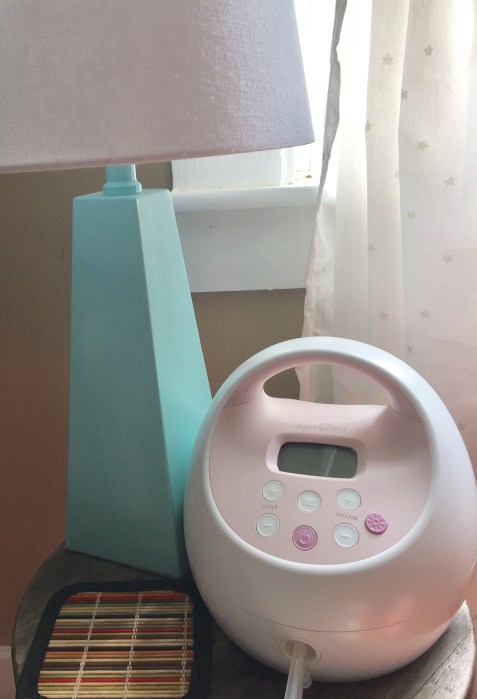
Breast Pump
As I’ve written about previously, I’m currently in the process of inducing lactation. I’m following the accelerated Newman-Goldfarb method, and I’m excited to announce that it is working!

Early on in my wife’s pregnancy, I had no idea that inducing lactation or co-nursing were possibilities. Like pregnancy, I thought breastfeeding was going to be exclusively her domain. I had been struggling with my lack of connection to this baby when our midwives mentioned that my body could do something many male bodies cannot – I can produce breastmilk.

I picked up the book Breastfeeding Without Birthing to learn more. I learned that inducing lactation is possible. I can be a supplementary food source to my child (or even a primary food source), and I can achieve that closeness, attachment, and bonding that comes from breastfeeding. Furthermore, as ethical vegans it is very important to my wife and I that we supply Baby with vegan breastmilk. Having two potential sources of milk increases the likelihood that Baby will be exclusively breastfed.

The first step in the accelerated protocol is to take birth control for at least a month. Birth control pills mimic pregnancy hormones and stimulate breast tissue growth. I got my birth control from Planned Parenthood, and I took only active pills for about five weeks. I also took Goat’s Rue, an herb that promotes lactation. I ordered a breast pump through my insurance. As those five weeks progressed, I noticed significant enlargement in my breasts. On one hot day, I even found myself leaking colostrum!

After five weeks, I stopped the birth control and started pumping. I pumped every three to five hours, even in the middle of the night. I also introduced galactogogues, such as Fenugreek and Blessed Thistle. Domperidone is also a commonly consumed glactogogue for those inducing lactation, but it is only available in the States through compounding pharmacies. I drank copious amounts of water and made sure my diet included oatmeal and Brewer’s Yeast.

The First Week

Day 1 Thursday, 6/29/17 Pumped for 30 minutes each time on high setting, clear droplets formed on the tips of my nipples.
Day 2 Friday, 6/30/17 Pumped for 30 minutes each time on high setting, clear droplets formed on the tips of my nipples, slight white mixed in with the clear. Started to get sore.
Day 3 Saturday, 7/1/17 Pumped for 30 minutes each time, started with gentler setting and progressed to higher setting over the course of the pumping, very small amount of milk produced, not very white. Very sore.
Day 4 Sunday, 7/2/17 Pumped for 30 minutes each time, started with gentler setting and progressed to higher setting over the course of the pumping. Produced approximately 1/8 ounce in the morning, 1/3 ounce in the evening. Very white. My wife said, “It smells like milk!” Began saving (freezing) production. Got a bad blister on my areola. Ouch!
Day 5 Monday, 7/3/17 Pumped for 30 minutes each time, started with gentler setting and progressed to higher setting over the course of the pumping. Produced approximately 1/3 ounce in the morning, 1/2 ounce in the evening, and 1/2 ounce at night. Ordered a smaller flange size.
Day 6 Tuesday, 7/4/17 Pumped for 30 minutes each time, started with gentler setting and progressed to higher setting over the course of the pumping. Produced approximately 1/2 ounce every time. Started to feel like I needed to pump if I went too long in between pumping sessions. Started to feel less sore. My breasts filled up and I had to go pump after watching a friend’s baby nurse.
Day 7 Wednesday, 7/5/17 Pumped for 30 minutes each time, started with gentler setting and progressed to higher setting over the course of the pumping. Produced approximately 1/2 ounce every time. Milk flow moved from drops to spray!

Shortly after my first week, I began to chart my pumping and production amounts.

Early Pumping Schedule

We are still about four weeks away from my wife’s due date, and already we have over 40 ounces of breastmilk in our freezer. This process is exhausting, but I hope it will be worth it. I cannot wait for the day I’m actually nursing Baby!

Frozen Milk 7.12.17

Planned Parenthood

On Friday I went to my local Planned Parenthood. Aside from the one time I stopped in to get pamphlets while staging a protest against some anti-choice people who had paraded onto my college campus, I had never been to Planned Parenthood before. I had certainly never been inside as a patient. But there I was, seeking birth control as part of the Newman-Goldfarb method for inducing lactation. I was nervous. What if they thought it was weird? What if they wouldn’t give the birth control to me? I tried to remind myself that I am a strong, capable, responsible woman in her mid-thirties exercising my right to reproductive medical care. I tried to remind myself that I had nothing to be nervous about! I tried, but I was not very successful.

The office was quiet, but friendly. A woman behind a desk handed me a clipboard and some papers.

“Fill these out,” she said.

I took a pen and sat down next to a big bowl of condoms and a book titled Dear Planned Parenthood: Love Letters from Catholics. I filled in all the highlighted sections of my form and handed it in.

“Thanks!” the woman said cheerfully. “Have a seat and we’ll call your name when we’re ready.”

I walked back over to my condom-side chair. I flipped through the book. Another woman walked in through the front door. Bounded, really. She had short, choppy hair with blue streaks in it.

“First time?” she asked. I thought I was playing it cool, but I guess my naivety showed.

“Yeah.”

“Don’t even sweat it!” she exclaimed, then bounced off to chit-chat with the ladies behind the counter.

Just then, a woman with dreadlocks appeared and called my name. I grabbed my things, stood up, and followed her. She told me she needed a urine sample and sent me to a room. When I reemerged, she took me down a hall to another office room.

She smiled and introduced herself. “I’m just going to ask you a few questions,” she explained. “First, what brings you in here today?”

“I’d like some birth control,” I told her, nervously.

“Okay – what kind do you want?”

“The pills.”

“Sure, sure,” she said. This was routine for her. She clicked through a few boxes and asked me a bit about my medical history. I answered more shyly than I expected as I stared at a poster on the wall covered in giant letters stating WE ALL DO IT. Two sets of legs, male and female, tangled with each other through the O.

“Are you currently having sex?” she asked.

“Yes.” But not the kind on that poster, I thought.

“What kind of birth control are you on now?”

“None.”

“Oh.” There was a long silence.

“My partner is a woman.”

“Oh, okay!” she said, clearly relieved. “But wait – do you have more than one partner? A male partner, perhaps?”

“No.”

There was another long silence.

“I’m sorry, but can I ask you something?” she looked at me, puzzled. “Why do you want birth control?”

“My partner is pregnant,” I explained. “We want to co-nurse. I’m following a protocol to induce lactation, and this is the first step.”

“WHAT?!” A huge smile spread across the woman’s face. “That is AMAZING! I didn’t even know you could DO that! Oh, this is so exciting!”

Her excitement put me at ease. “Yes!” I said, fears and nervousness suspended. “It is exciting.”

“Oh, gosh. Okay. I’m going to go get the doctor!” the woman sprang out of her chair and rushed out the door, her smile still hanging in the air.

A few moments later, the doctor walked in. She had short hair and cute glasses. She wore big pink earrings that were in the shape of either flowers or vaginas. Very Georgia O’Keefe.

“How’s our most exciting patient?” she asked. I smiled back at her. She talked to me for a bit about the protocol and searched her database for the best choice. She showed me how the clicking circle birth control dispenser worked and explained when to take each pill. She told me that I might feel a little ill at first. She packed up my pills, tucked them into a white paper bag, and sent me on my way.

The women behind the desk waved and smiled. “Good luck!” one shouted. Another clasped her hands beneath her chin.


Midwives and Home Births and Co-Nursing, Oh My!

After six months of the mainstream medical shuffle, we decided to interview some midwives. It took all that time to realize that for as much thought and planning and effort that had gone into getting Her pregnant, neither she nor I had put enough thought into prenatal care. When the pregnancy test came up positive, we did what every set of expectant parents do – we went to the hospital. From there it was all scans and tests and ultrasounds and group care. The experience was not tailored to our specific healthcare needs or personal desires. She was just another pregnant lady due in August, and I was just there for the ride.

When yet another appointment took two hours and the primary result was a computer print-out of the outdated USDA food pyramid, we decided to reexamine what we were doing. We bought books. We watched documentaries. We called the midwives.

We had our first appointment with the midwives about a week and a half ago. In our hour-long consultation, the midwives sat down with us and let us talk about our hopes and dreams for our birth experience. We talked about homebirths and whether She was a good candidate. We talked and we listened. We discussed safety and comfort. We heard Baby’s heartbeat. We felt understood. We decided to walk away from mainstream medical care and into the care of the midwives.

IMG_0824

During our appointment, one of the midwives said something to us that struck me. We were talking about my role as the non-gestational parent. I mentioned how I was feeling a bit like an outsider. The midwife noted that most partners feel this way, including heterosexual fathers (even if to a slightly lesser extent due to the baby containing their DNA). There’s that same helpless feeling; that same sideline feeling. Then she quipped, But you can do something those father’s can’t – YOU can breastfeed your baby.

What?

The idea of breastfeeding the baby growing inside my wife was exciting, confusing, and fascinating. But how does that work? Can I really do that? Wouldn’t it be weird?

In my quest to know more, I picked up the book Breastfeeding Without Birthing. The book was geared primarily toward adoptive mothers or mothers whose babies were born through surrogacy. However, the information was still there. In that book, I learned that breastfeeding without birthing has strong roots throughout history. Women nursed orphans, and communities nursed each other’s’ babies. I learned that lactation can be induced simply by repeated placing a baby to your breast, though most women today choose to induce by a combination of pumping and herbal supplements, or even pharmaceutical use. At this point, I would like to avoid pharmaceuticals, but it is really exciting to think that my wife and I might be able to share breastfeeding!

At first, my wife was a reluctant enthusiast. She worried that biology will take over and that she will be jealous seeing me nurse the baby. But she’s coming around. In fact, at this point I’d say that she’s almost looking forward to it.

One of the most wonderful aspects of being in a same-sex relationship is the equality of it all. We divvy up household chores and tasks based on who prefers the task rather than falling back on assigned gender roles. Pregnancy has offset that balance, and I’ll admit that it’s been a bit tough on our relationship. There are now so many obligations that are assigned rather than chosen. Co-nursing will allow us to maintain the balance that has served our relationship well for all these years.

Co-nursing will also allow for equal bonding and attachment and for reprieve for each of us when nursing becomes too tedious. It will help to establish both of us as Mother to this child. And, should one or both of us not produce enough milk, between the two of us we will be able to nourish this baby with our bodies alone. If we over-produce, we will be able to donate the milk to mothers in need, particularly vegan mothers who worry that introducing animal products not previously introduced in utero or in their breastmilk will be too much of a shock for their baby. There is so much we can do. I love being a woman!

And so the journey begins.

Midwives, home births, co-nursing – we’re in!

Salt & Sweet

My brother-in-law and his wife are pregnant. They are exactly eight weeks behind my wife. We just found out.

Now that some time has passed, I’m happy for them and I am happy for Baby, who will have a cousin her age. But at first when they told us, it stung. They did the whole wait till 13-weeks then announce in some elaborate straight couple way. Thing is, we knew they were trying. We had been having discussions about how it was going. And they were lying to us. That stung. It stung when they made a big production about how their pregnancy was “promoting” my wife’s parents to grandparents when we were already making them grandparents. As if our family didn’t matter; as if our baby was not real. It stung when they went on and on about how they didn’t think the timing was right but had sex anyway and whaddya know, they’re pregnant (it took my wife and I nearly a year). It stung because I was jealous.

I want my family to count. I want my family to matter. I want my parents and my wife’s parents to feel like they really are grandparents to this baby we’re having. I want to have relatives as excited about our pregnancy as they are about my brother- and sister-in-law’s pregnancy. I want my in-laws to know what it’s like to have people less than excited for you or questioning your choices (“Why aren’t you guys just adopting since you can’t have a baby naturally anyway?”). I want to be able to have sex with the person I love and make a baby. I want Baby to be part me and part her. I don’t want to have to fight so hard to carve out our place in the world or to carve out my place as Baby’s mother. I don’t want to be the only one without a biological connection to the little ones in our families.

I told my wife I needed some space and went upstairs to cry. I got in bed and stared. I felt like I was being childish. Why couldn’t I just be happy for them? Why am I whining about fairness? Life’s not fair. I should get over it. But in that moment, I couldn’t.

Sweet Love, my wife said. I know you need your space, but do you mind if I come up? I have something to show you.

I heard her feet on the stairs and then saw her in the doorway. I saw concern in her eyes for the woman she loves, but I saw something else, too. I couldn’t place it. She walked over and sat next to me on the bed. She stroked my hair for a minute before taking my hand and placing it on her belly.

Suddenly, I felt a little push against my hand. I sat up, eyes wide as a grin began to spread across my face. I felt her kick! I felt Baby!

I pushed down a little harder. Kick, kick! There she was again! That was my baby! And this was her saying hello to me for the very first time.

My wife pulled me to her and held me. You matter, she said. This little girl is so lucky she’s going to have you as her mom.

I looked at my wife, this incredible woman carrying our child. All that anger, frustration, and jealousy began to recede. Because in that moment, we were a family. We were real. I knew it. We were the realest thing I had ever seen, experienced, lived, or loved.

Because in that moment, I was the luckiest woman alive.