After six months of the mainstream medical shuffle, we decided to interview some midwives. It took all that time to realize that for as much thought and planning and effort that had gone into getting Her pregnant, neither she nor I had put enough thought into prenatal care. When the pregnancy test came up positive, we did what every set of expectant parents do – we went to the hospital. From there it was all scans and tests and ultrasounds and group care. The experience was not tailored to our specific healthcare needs or personal desires. She was just another pregnant lady due in August, and I was just there for the ride.
When yet another appointment took two hours and the primary result was a computer print-out of the outdated USDA food pyramid, we decided to reexamine what we were doing. We bought books. We watched documentaries. We called the midwives.
We had our first appointment with the midwives about a week and a half ago. In our hour-long consultation, the midwives sat down with us and let us talk about our hopes and dreams for our birth experience. We talked about homebirths and whether She was a good candidate. We talked and we listened. We discussed safety and comfort. We heard Baby’s heartbeat. We felt understood. We decided to walk away from mainstream medical care and into the care of the midwives.
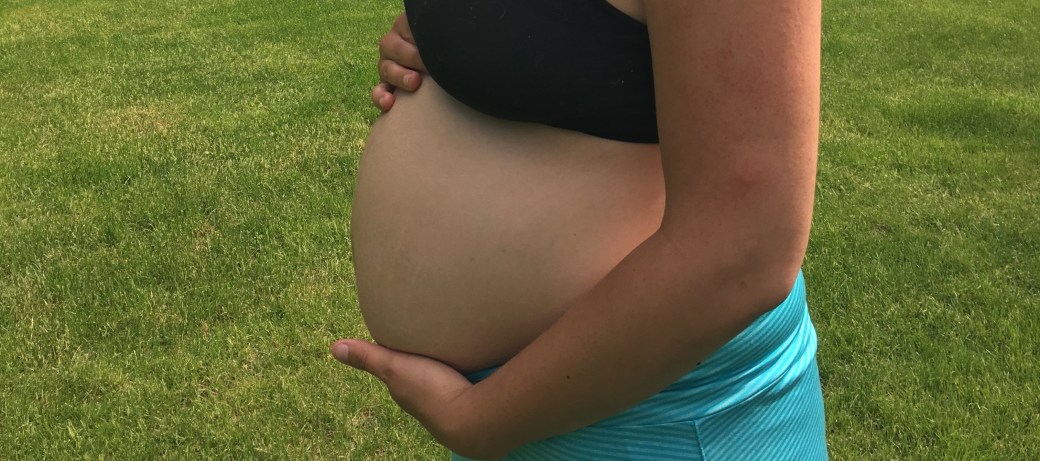
During our appointment, one of the midwives said something to us that struck me. We were talking about my role as the non-gestational parent. I mentioned how I was feeling a bit like an outsider. The midwife noted that most partners feel this way, including heterosexual fathers (even if to a slightly lesser extent due to the baby containing their DNA). There’s that same helpless feeling; that same sideline feeling. Then she quipped, But you can do something those father’s can’t – YOU can breastfeed your baby.
What?
The idea of breastfeeding the baby growing inside my wife was exciting, confusing, and fascinating. But how does that work? Can I really do that? Wouldn’t it be weird?
In my quest to know more, I picked up the book Breastfeeding Without Birthing. The book was geared primarily toward adoptive mothers or mothers whose babies were born through surrogacy. However, the information was still there. In that book, I learned that breastfeeding without birthing has strong roots throughout history. Women nursed orphans, and communities nursed each other’s’ babies. I learned that lactation can be induced simply by repeated placing a baby to your breast, though most women today choose to induce by a combination of pumping and herbal supplements, or even pharmaceutical use. At this point, I would like to avoid pharmaceuticals, but it is really exciting to think that my wife and I might be able to share breastfeeding!
At first, my wife was a reluctant enthusiast. She worried that biology will take over and that she will be jealous seeing me nurse the baby. But she’s coming around. In fact, at this point I’d say that she’s almost looking forward to it.
One of the most wonderful aspects of being in a same-sex relationship is the equality of it all. We divvy up household chores and tasks based on who prefers the task rather than falling back on assigned gender roles. Pregnancy has offset that balance, and I’ll admit that it’s been a bit tough on our relationship. There are now so many obligations that are assigned rather than chosen. Co-nursing will allow us to maintain the balance that has served our relationship well for all these years.
Co-nursing will also allow for equal bonding and attachment and for reprieve for each of us when nursing becomes too tedious. It will help to establish both of us as Mother to this child. And, should one or both of us not produce enough milk, between the two of us we will be able to nourish this baby with our bodies alone. If we over-produce, we will be able to donate the milk to mothers in need, particularly vegan mothers who worry that introducing animal products not previously introduced in utero or in their breastmilk will be too much of a shock for their baby. There is so much we can do. I love being a woman!
And so the journey begins.
Midwives, home births, co-nursing – we’re in!

 sugar on snow