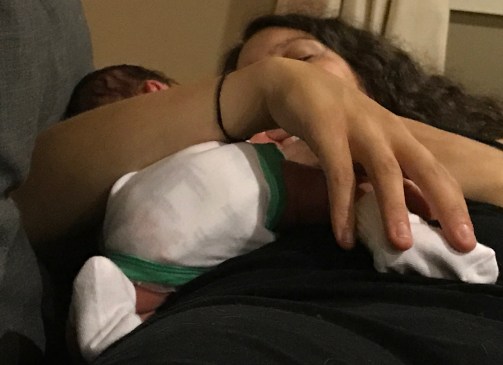
The days immediately following the birth were intense. I was manic, high from the adrenaline rush of the birth, from precious little sleep, and from never seeming to be able to find time to eat. My wife was recovering from a tear and she had been given strict instructions from our midwives to rest. I ran around cleaning the house. Wiping counters, scrubbing dishes, sweeping floors. I couldn’t help myself. In between tasks, I would snuggle Baby, sing and dance with her to Bob Dylan (“How does it FEEEEEEL”), stare at her sweet face, and bring my wife food, water, and tea.
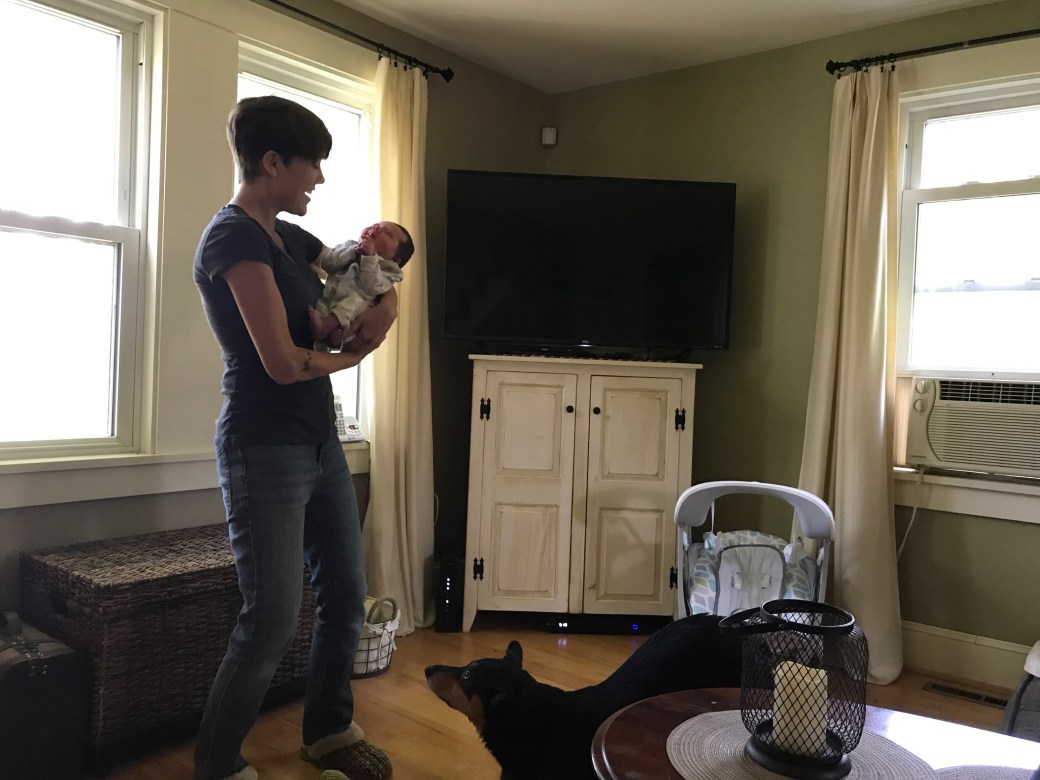
Our friends put together a meal train, each bringing us food every few days. We enjoyed homemade spring rolls, chili, kale salad, ratatouille, sweet potato tacos, and hot falafel. We felt so cared for; so loved.


I will never forget the first time we put Baby to my breast. Baby had been alive less than 24 hours when my wife asked, “Do you want to nurse her?” I was overjoyed. After nearly seven weeks of pumping every three hours, this was my reward. I held Baby to me and smiled as I watched her shake her head around and grunt while sniffing out the nipple. Then she latched – heaven! This is what I was meant to do.
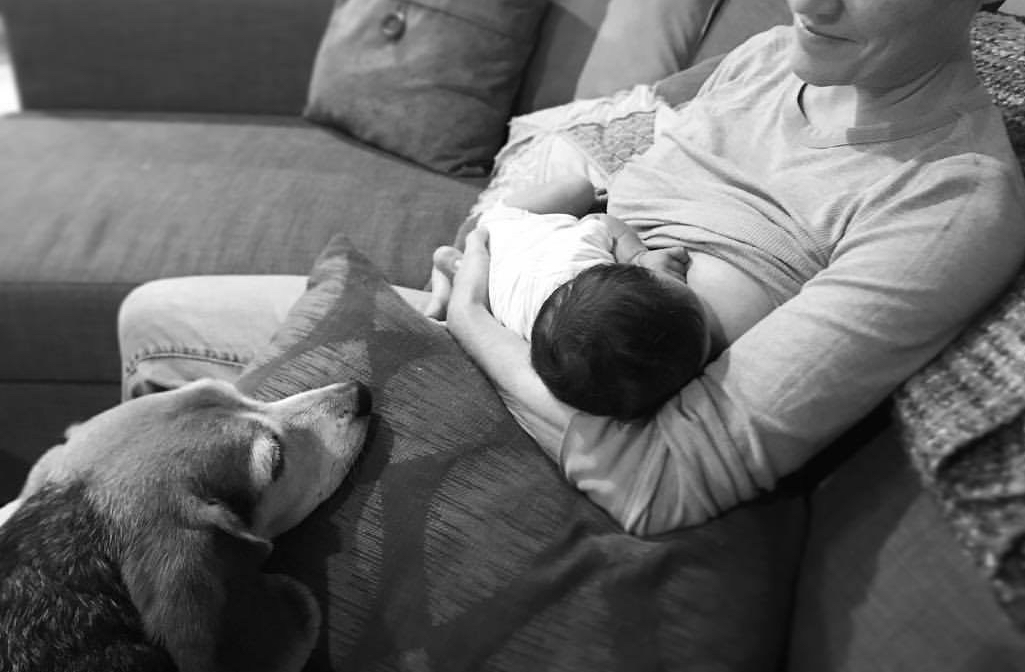
My wife and I took turns nursing Baby. We had my wife do most of the nursing at first – we wanted Baby to get the colostrum and we wanted to make sure my wife established a good milk supply. As the days progressed, I nursed her more and more. It felt like magic.
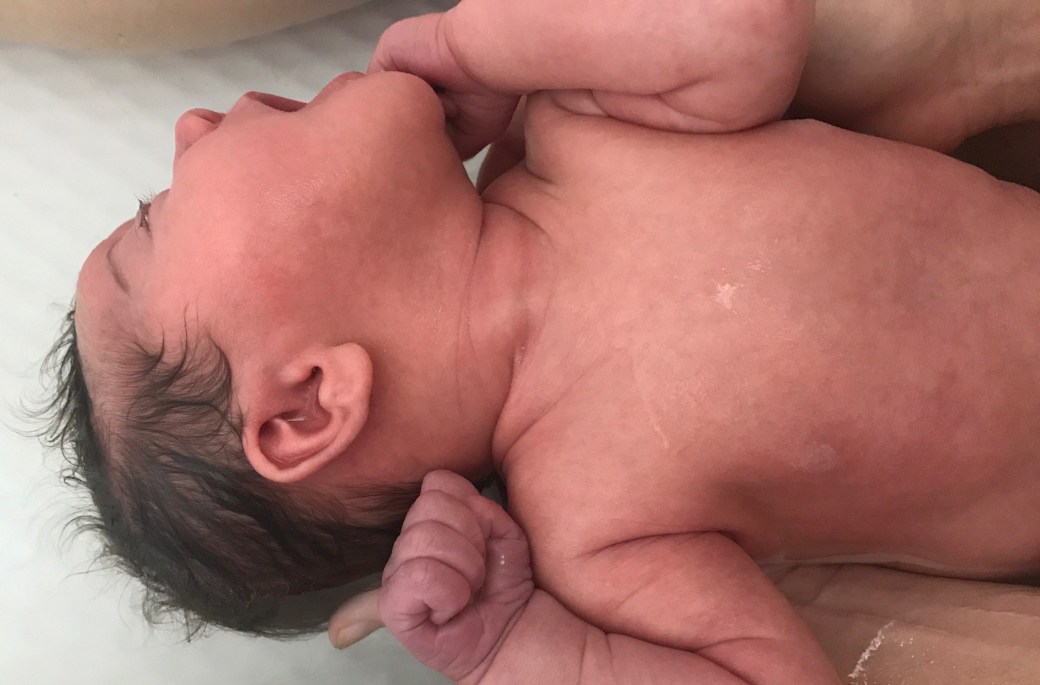
With each passing day, we learned more about Baby. First lesson: she hates being swaddled. Okay. Lesson two: she loves bath time. Wonderful!
We took her outside and showed her the backyard. We took her on walks through the neighborhood. We took her to our local farm to pick up veggies and learned that two goats shared her birthday. We took her to watch the sunset at a nearby lake.

My wife’s parents came to visit Labor Day week. They were thrilled to meet their first grandchild. Baby enjoyed having two new bodies on which to sleep, and we enjoyed spending time with my wife’s parents. We strolled through our hometown and checked out the Massachusetts Museum of Contemporary Art.


We began cloth diapering when Baby was around three weeks old. I thought it would be difficult, but it turns out that for us it is just as easy as using paper. Once we switched, Baby no longer got diaper rashes. We also felt good about reducing the amount of trash we produced for the landfill. Today, we’re doing a combination of cloth diapers and Elimination Communication, working hard to pay attention to Baby’s cues and respond accordingly.

We celebrated Baby’s one month birthday in Maine, hiking Acadia National Park. I carried her the entire time. I have always loved hiking, but it was even more special to be able to hike through gorgeous terrain while simultaneously hugging my daughter.


During the second month, Baby began to smile and respond to our voices, which was just precious. We would call her name and her face would light up with joy. Baby’s eyes became brighter; we loved engaging with her.
However, while our second month with Baby included more sweetness, it also brought more challenges. I returned to work, which was outrageously difficult. I cried hard for several days. I had always thought of myself as a person who liked to work; who would want to work over staying home with a child. The pull of Baby changed that, and walking away from Baby each morning feels like someone is stabbing my heart.
My wife’s face remains paralyzed. We haven’t seen any improvement since it first happened. By this time, we’ve seen a variety of doctors and a naturopath. She was being treated for Lyme, even though we had already had three negative Lyme tests. Eventually, a new diagnosis appeared: Ramsay Hunt Syndrome (RHS). A complication of a Shingles reactivation, RHS facial paralysis can be permanent. We made an appointment with a neurologist who confirmed that my wife’s facial paralysis was severe – she may never regain function of her face. We are devastated.
To make matters worse, my wife’s breastmilk supply began to dwindle. It may have been due to stress or due to allowing me to feed Baby too much. We decided to make a breastfeeding schedule and my wife decided to add pumping into her daily routine. Now a month into these changes, I am happy to report that they are working.
Shortly before Baby’s two-month birthday, Baby’s cousin was born. My wife’s brother and sister-in-law had a little girl. And all that jealousy that I had previously harbored disappeared. I was instantly in love with my new niece.
We celebrated Baby’s second month in San Francisco. We flew out west for my brother’s wedding, and Baby did great on the plane. My brother and his wife were thrilled at the opportunity to meet Baby, and took to her right away. My parents, who also live out west, were able to meet Baby, too. Of course, everyone adored her – how can you not?

We spent some time at my parents’ house, where my sister and her boys also got to know Baby. My nephews are 9 and 7 years old, and they adored Baby! I thought for sure the novelty would wear off, but it did not. They would get up early with Baby each morning and coo to her as she rolled around on a blanket. The 9-year-old would rock Baby gently in a swing and sing her songs. Baby even went swimming in my parents’ pool!


Baby accompanied the boys to their Fall Festival, where she rocked her pumpkin outfit from Nana as well as her California shades.

Today Baby is twelve weeks old and officially out of her fourth trimester. In a way, that seems appropriate. I feel as though I have known her my entire life. In another sense, time has flown by. Baby grows and changes with each passing day and somehow, in spite of all logic and reasoning, I love her more every minute.
 “I can’t close my eye.”
 sugar on snow